Skip to content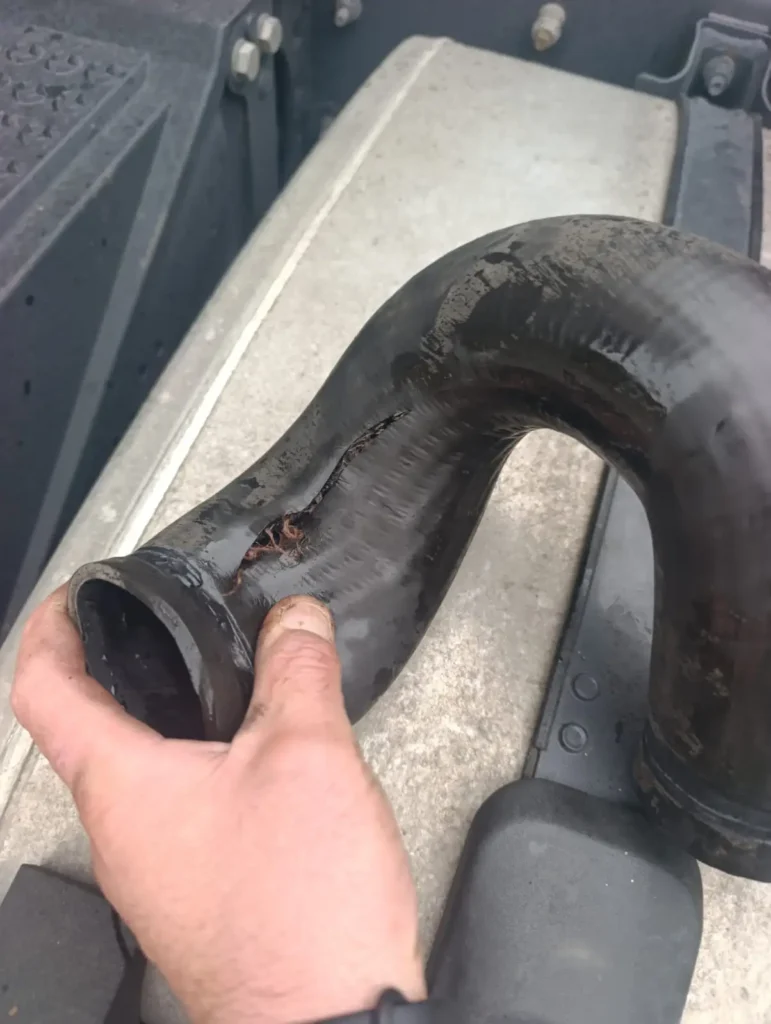
Steam pouring from under a lorry’s bonnet on a busy motorway is one of the more alarming sights a driver can face. It usually means one thing: the cooling system has failed, and the engine is at serious risk of overheating within minutes. That is exactly what happened to an international long-haul driver on the A5 near Frankfurt am Main, and it is the kind of breakdown that, handled badly, turns a two-hour delay into a five-figure repair bill.
This case study walks through precisely what happened, how LKWHelp24’s partner network responded, and why treating an overheating engine as an emergency — not an inconvenience to shrug off — saved this driver a great deal of money, time, and stress. If you operate lorries anywhere in Germany, or you are a fleet manager trying to work out what roadside assistance actually looks like in practice, this is a useful example to keep in mind.
We publish these accounts because too many drivers still underestimate what a burst coolant hose can do to an engine, and too many fleets still don’t have a clear plan for when it happens on the autobahn rather than in the yard. Numbers, timings and costs below are exact, taken from the job record.
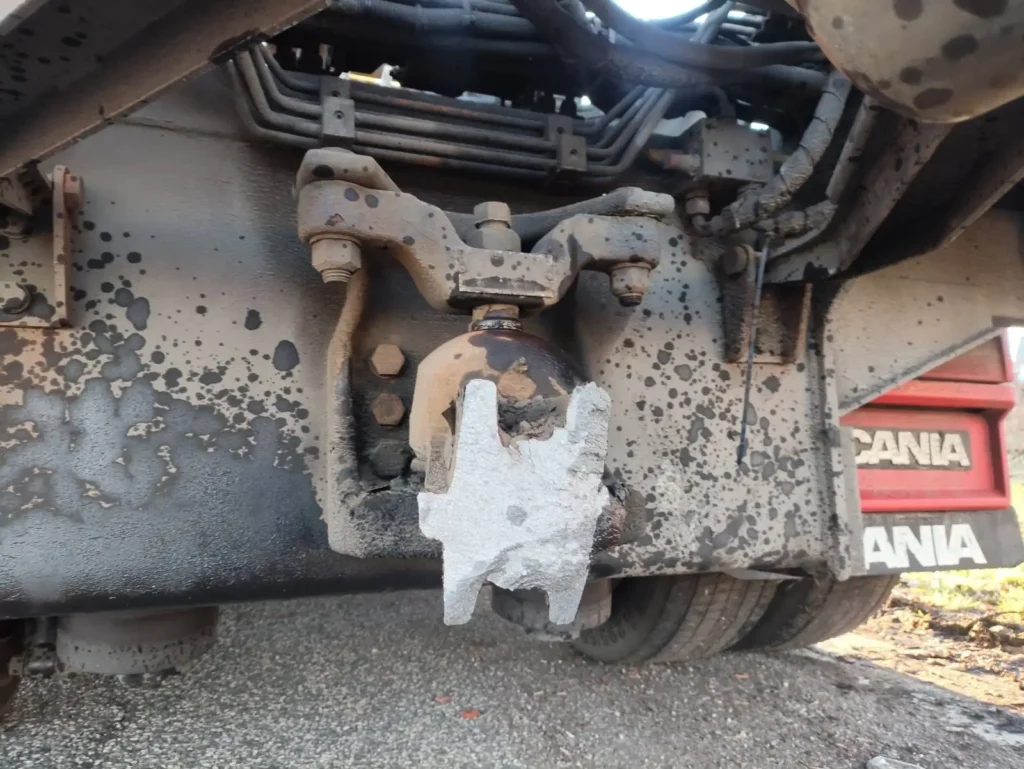
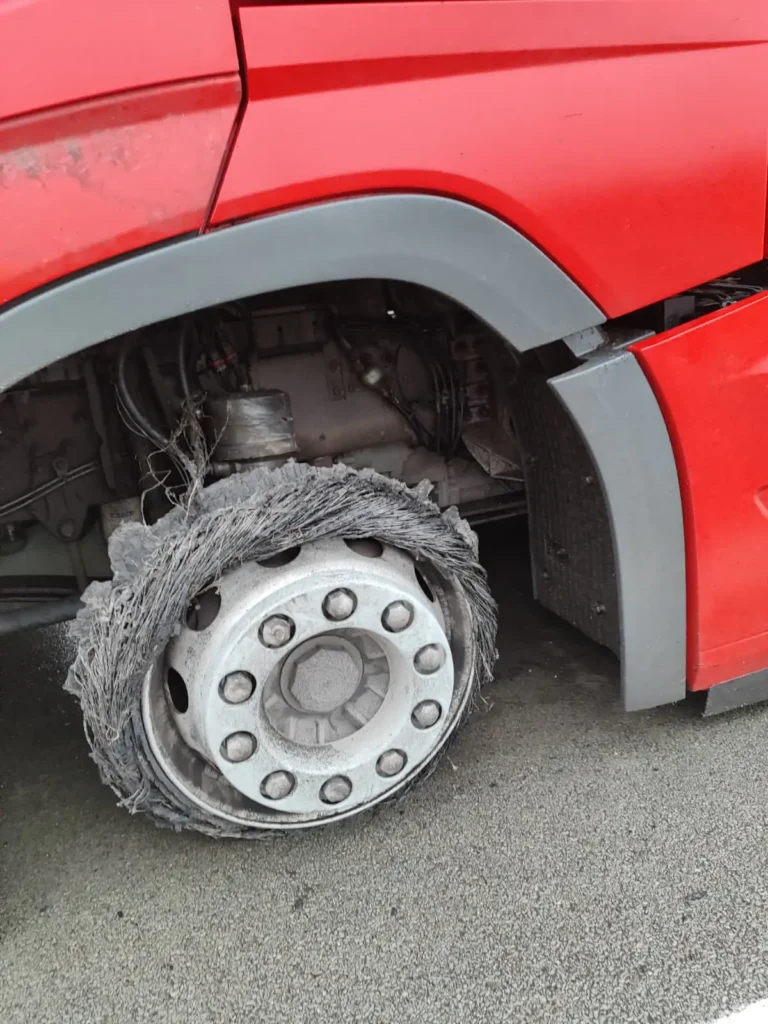
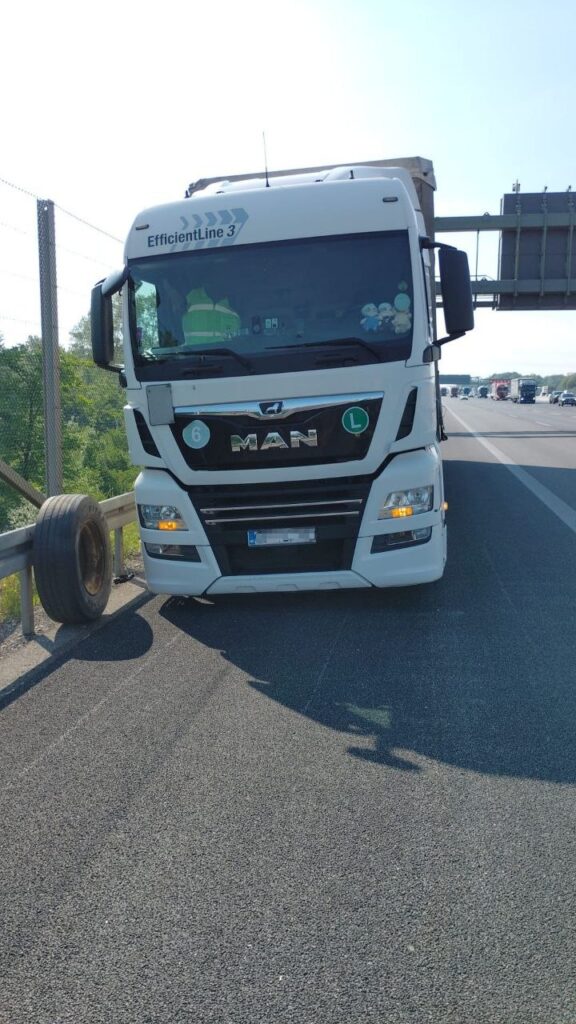
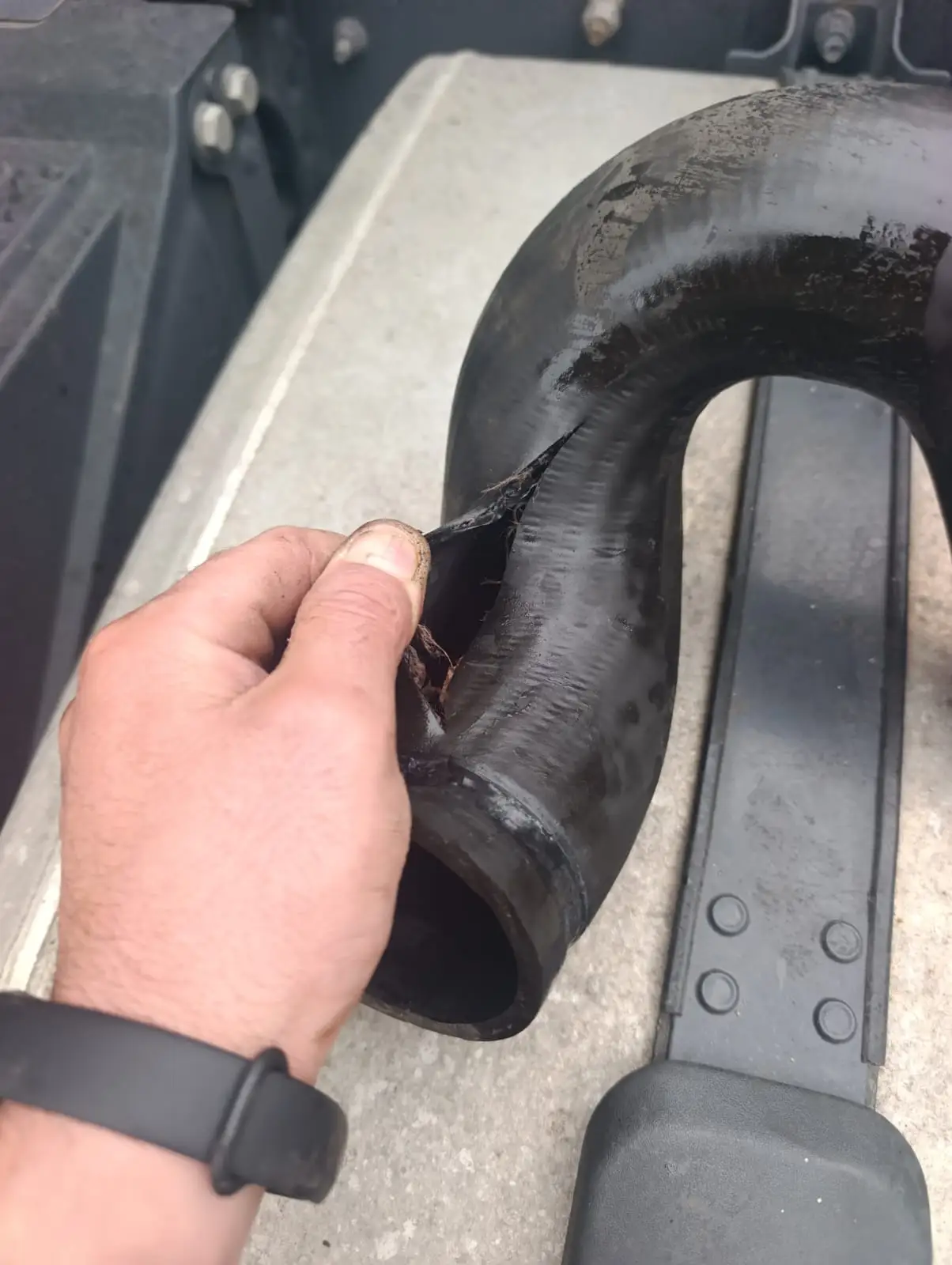
Bildunterschrift: „Geplatzter Kühlwasserschlauch an einem Sattelzug auf der A5 bei Frankfurt – mobiler Motor-Notdienst von LKWHelp24.”
The Emergency: A5 Near Frankfurt, Direction Kassel
The vehicle involved was a long-haul articulated tractor unit, roughly 40 tonnes gross combination weight, driven by an international driver on a scheduled delivery run. Nothing about the trip had been unusual up to that point — no warning lights, no strange noises — until the temperature gauge began climbing and steam started escaping from around the engine bay.
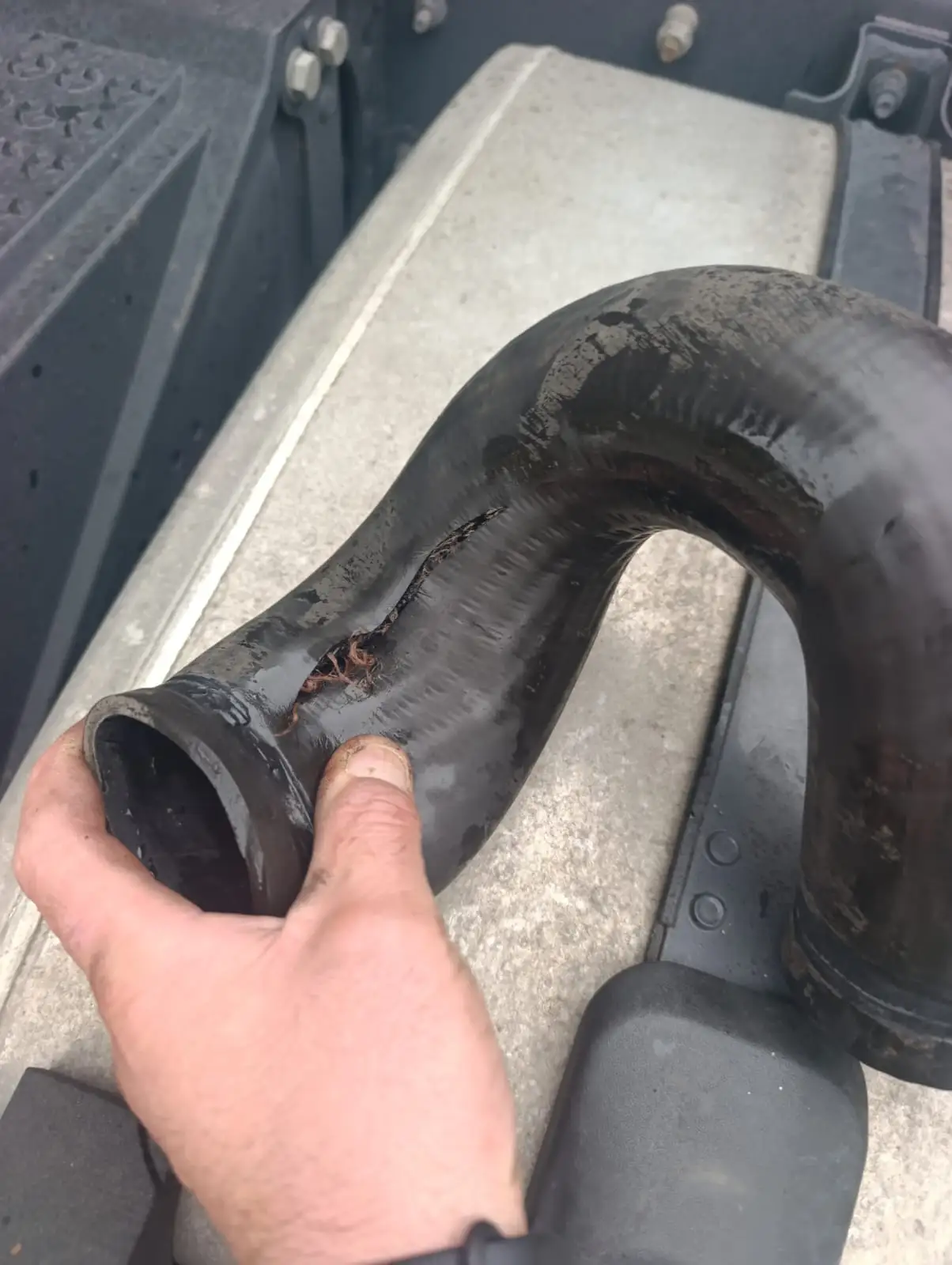
The cause turned out to be the upper coolant hose, sometimes called the top radiator hose, which had split under pressure. On a diesel lorry engine running at operating temperature, the cooling system typically holds coolant at somewhere between 1.0 and 2.0 bar above atmospheric pressure, keeping the boiling point elevated so the system can shed heat efficiently even in stop-start traffic or on long motorway climbs. When a hose ruptures, that pressure vents almost instantly. Coolant sprays out, the pump can no longer circulate what remains, and the engine block starts absorbing heat it has nowhere to send.
The driver did the right thing straight away: he noticed the temperature rising, saw the first wisp of steam, and pulled onto the hard shoulder on the A5 in the direction of Kassel before the situation escalated further. That single decision — stopping the moment something looked wrong, rather than pressing on to the next services — is the difference between a straightforward hose replacement and a cracked cylinder head. He switched on the hazard lights, put out a warning triangle, and called LKWHelp24.
How Help Was Organised
LKWHelp24 doesn’t operate its own fleet of repair vans everywhere in Germany. Instead, we run a vetted network of mobile lorry breakdown and pannenhilfe partners covering every region, so that whichever motorway a vehicle breaks down on, there’s a qualified technician within reasonable reach. For this case, dispatch worked as follows:
- The driver’s call was logged and the exact location on the A5 pinned down, including direction of travel and the nearest hard-shoulder marker post.
- A mobile lorry emergency service (LKW-Notdienst) covering the greater Frankfurt area was contacted and briefed on the symptoms — overheating, steam, sudden coolant loss — so the technician could bring the right parts and tools rather than guessing on-site.
- An estimated time of arrival was confirmed and relayed back to the driver, along with clear safety instructions: stay well clear of the traffic side of the vehicle, do not attempt to open the coolant expansion tank under any circumstances while the engine is hot, and keep the hazard triangle visible to oncoming traffic.
- The partner’s service vehicle, carrying a stock of common hose sizes, clamps, and coolant, was routed directly to the breakdown point.
This is the part of the process that drivers rarely see but that makes the biggest difference to how quickly a job gets done: a dispatcher who understands lorry mechanics well enough to send the right specialist with the right parts the first time, instead of a generic callout that arrives, diagnoses the problem, and then has to leave again to fetch a part.
The Situation On-Site
By the time the technician arrived, the engine had already been switched off for a while and had begun to cool naturally, which was fortunate — it meant the block itself likely hadn’t been driven hard enough at excessive temperature to cause warping or head gasket damage. Even so, opening a hot cooling system is genuinely dangerous. Coolant under pressure and at temperatures well above 100°C can cause serious scalding if the expansion tank cap is removed too early, so the first job on-site is always patience: securing the area properly and letting the engine drop to a safe working temperature before touching anything in the cooling circuit.
Once safe to proceed, the technician confirmed the diagnosis: the upper coolant hose had a clean split along a section of the rubber, most likely a case of material fatigue combined with the constant pressure cycling that long-haul motorway driving puts on ageing hoses. There was no sign of a cracked radiator, no oil contamination in the coolant to suggest a head gasket problem, and no damage to the fan shroud or surrounding pipework. This was, in other words, a contained mechanical failure rather than the start of something worse — but only because the driver had stopped in time.
Step-by-Step: What the Technician Did
Step 1 — Securing the vehicle and cooling the engine down. Warning triangle repositioned, hazard lights confirmed, and the bonnet left closed until temperatures had dropped enough to work safely.
Step 2 — Diagnosis. A full visual check of the cooling system, confirming the failure was isolated to the upper hose and that no other components — water pump, radiator core, thermostat housing — showed signs of damage.
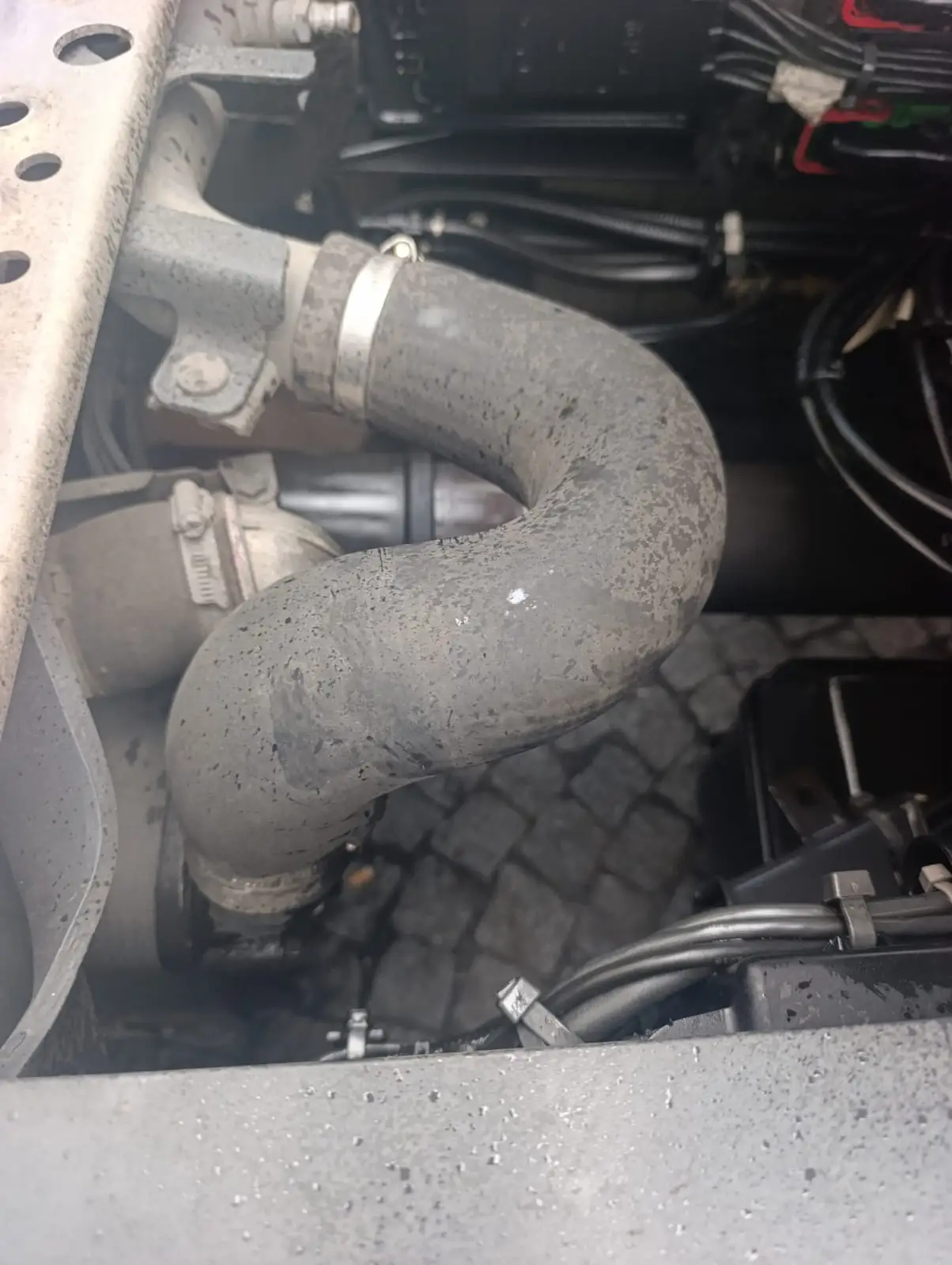
Step 3 — Removing the defective hose. The split hose was disconnected at both ends, the clamps released, and the old section removed along with any remaining coolant drained safely from the affected section of the circuit.
Step 4 — Fitting the replacement. A correctly sized replacement hose was fitted and secured with new clamps at both connection points, torqued to the correct specification so the joint would hold under full system pressure.
Step 5 — Refilling, bleeding, and testing. Coolant was topped up to the correct level, and the system was bled to remove trapped air — an essential step, because air pockets in a cooling system cause exactly the kind of localised overheating that started this whole chain of events in the first place. The engine was then run and monitored for leaks at the new hose connections and for a stable, correct temperature reading before being signed off as roadworthy.
The whole repair, from arrival to final clearance, took roughly an hour on-site — quick, but only because nothing beyond the hose itself needed attention.
Full Timeline
| Time | Phase | Action |
|---|---|---|
| 11:20 | Call received | Driver contacts LKWHelp24 from the hard shoulder |
| 11:31 | Dispatch | Mobile partner assigned, ETA confirmed |
| 12:10 | Arrival | Service vehicle reaches the breakdown location |
| 12:18 | Safety | Scene secured, engine left to cool |
| 12:40 | Removal | Defective coolant hose demonted |
| 12:58 | Fitting | Replacement hose fitted, coolant topped up |
| 13:08 | Bleeding | System bled of trapped air, leak test carried out |
| 13:12 | Sign-off | Final inspection, documentation completed, vehicle roadworthy |
Total time: approximately 1 hour 52 minutes from the first phone call to the lorry being back on the road, with roughly one hour spent working at the roadside itself.
Cost Breakdown
| Item | Price (EUR) |
|---|---|
| Callout / 24/7 motorway emergency service | 180 |
| Replacement hose & clamps (materials) | 90 |
| On-site labour | 140 |
| Coolant (top-up) | 25 |
| TOTAL | 435 EUR |
There was no secondary damage — no radiator, water pump, or head gasket issues — largely because the driver stopped as soon as he noticed the temperature climbing rather than trying to reach the next rest stop.
A few factors shape the final price on jobs like this. Motorway callouts carry a premium over workshop repairs because of the 24/7 availability, the travel involved, and the safety measures required when working on a live hard shoulder. Parts cost varies depending on hose availability for the specific engine model — some are stocked on the service vehicle, others need sourcing, which can add both time and cost. And critically, the price difference between “hose replacement” and “hose replacement plus overheating damage” is enormous: a cracked cylinder head or blown head gasket from continued driving on an overheating engine can run into several thousand euros, plus days of vehicle downtime and a tow to a workshop rather than a roadside fix. At 435 EUR total, this job sits firmly at the cheap end of what a cooling system failure can cost — precisely because it was caught early.
Why a Professional Service Is Essential
It’s tempting, especially for an experienced driver, to think a burst hose is a simple enough job to handle alone with a bottle of water and a bit of tape. It very rarely is, and here’s why:
- Scalding risk. Removing a coolant expansion tank cap while the system is still hot and pressurised can cause serious burns from escaping steam and boiling coolant.
- Wrong diagnosis, wrong fix. Not every overheating event is a simple hose failure — it can equally be a failed thermostat, a seized water pump, a slipping fan clutch, or the early signs of a head gasket problem. Treating the symptom without confirming the cause risks driving off with the real fault still unresolved.
- Improvised repairs don’t hold. A hose “fixed” with tape or a jubilee clip salvaged from elsewhere might get you a few kilometres, but it is not rated for the pressure and temperature the cooling system runs at, and a second failure further down an unfamiliar stretch of motorway is a real possibility.
- Air in the system. Simply topping up coolant without properly bleeding the system leaves air pockets that cause localised hot spots — meaning the temperature gauge can look fine while a specific part of the engine is still running dangerously hot.
- Legal and safety exposure on the hard shoulder. Working on a lorry engine on a live motorway without the correct positioning, signage, and hi-vis protocol is genuinely dangerous, both to the driver and to passing traffic.
- Warranty and roadworthiness. An improper repair carried out without the right parts or torque specification can affect vehicle warranty and, in the worst case, leave a component prone to sudden failure at speed.
A qualified mobile technician carries the right hoses, clamps, and coolant for the job, knows how to safely depressurise and bleed a cooling system, and can rule out — or catch — the more serious faults that a burst hose sometimes masks.
Typical Breakdown Situations We Handle Across Germany
LKWHelp24’s partner network responds to the full range of lorry, trailer, and coach breakdowns anywhere in Germany, 24 hours a day, including:
- Coolant system failures — burst hoses, radiator leaks, water pump failure, thermostat faults
- Tyre blowouts and punctures on tractor units, trailers, and vans (mobiler Reifenservice / Reifenmontage)
- Diesel system issues, including air in the fuel system after running dry and requiring fuel system bleeding
- Battery failure and jump-starting or battery replacement at the roadside
- Heavy recovery and towing (Abschleppdienst) for lorries stuck in mud, ditches, or after accidents
- Brake system faults and air-line failures
- Electrical faults preventing the vehicle from starting or running safely
- Lockouts and key-related issues
Whatever the fault and wherever it happens — Autobahn hard shoulder, Rastplatz, industrial estate, or open road — the priority is the same: get a qualified technician to the vehicle fast, diagnose correctly, and get the driver moving again safely.
Prevention Tips for Drivers and Fleets
Most cooling system failures don’t come out of nowhere. A few habits significantly reduce the risk of a hose letting go on the motorway:
- Check coolant level and condition during routine pre-trip inspections, not just when a warning light appears.
- Look at hoses for visible cracking, bulging, or softness — rubber degrades with age and heat cycling long before it actually bursts, and a hose that feels spongy under light pressure is often close to failing.
- Don’t ignore a slowly rising temperature gauge. Pulling over at the first sign of an unusual reading, as this driver did, is almost always cheaper and safer than continuing to the next stop.
- Keep an eye on coolant top-up frequency. If a vehicle needs coolant added more often than it used to, there’s a slow leak somewhere that’s worth finding before it becomes a sudden one.
- For fleets, build hose and cooling system checks into scheduled maintenance intervals rather than waiting for a failure — hoses are a low-cost part to replace proactively compared with the cost of an overheating engine and a day or more of downtime.
- Carry basic breakdown documentation and emergency contact numbers in the cab, including a saved number for a trusted 24/7 lorry emergency service, so there’s no delay figuring out who to call when something goes wrong.
Fleet Maintenance and Cooling System Care
For fleet operators running multiple tractor units across long-haul routes, cooling system reliability deserves the same attention as tyres and brakes — it’s just less visible until it fails. Hoses, particularly on engines doing high annual mileage on the autobahn, are subject to constant heat cycling and vibration that shortens their working life well before a scheduled service interval might catch it. Building a simple visual and pressure check into quarterly maintenance, alongside coolant quality testing, catches the majority of failures before they happen on the road rather than on the forecourt.
It’s also worth thinking about what happens after a hose failure like this one. In this case, a straightforward, correctly fitted replacement hose was used and the system was properly bled and pressure-tested before the vehicle was cleared to continue. That’s the standard every cooling system repair should meet, whether it’s carried out in a workshop or, as here, at the roadside — using the right part for the engine, correctly torqued clamps, and a full bleed and leak check rather than a quick top-up and a hope for the best.
LKWHelp24: Your Truck Emergency Partner
This case is a fairly ordinary example of what LKWHelp24 does every day, all across Germany. A handful of things make the difference between a breakdown that costs 435 EUR and ninety minutes, and one that ends in a tow truck and a workshop bill running into thousands:
- 24/7 availability, genuinely. Calls are answered at 11:20 on a weekday motorway just as readily as they would be at 3 a.m. on a Sunday.
- A certified partner network covering the whole country, so response times stay short regardless of which motorway or region a vehicle breaks down on.
- Correct diagnosis before repair. Technicians are briefed on symptoms in advance and carry the parts most likely to be needed, cutting out unnecessary return trips.
- Transparent, itemised pricing. Every job comes with a clear cost breakdown by item, agreed before work is signed off — no surprises on the invoice.
- Multilingual support. International drivers, who make up a large share of long-haul traffic on German motorways, are supported in their own language when reporting a breakdown, reducing the risk of miscommunication at exactly the moment clarity matters most.
- Safety-first process. From hazard triangle positioning to letting an engine cool before opening the cooling system, every step follows established roadside safety practice, not shortcuts.
Summary
- Location: A5 motorway, hard shoulder near Frankfurt am Main, direction Kassel
- Vehicle: Long-haul articulated tractor unit, approx. 40 tonnes, international driver
- Fault: Burst upper coolant hose — overheating risk, no further vehicle travel possible
- Response time: 11 minutes from call to partner dispatch; 50 minutes to arrival on-site
- Total time, call to roadworthy: approximately 1 hour 52 minutes
- On-site repair time: approximately 1 hour
- Total cost: 435 EUR (itemised: callout, materials, labour, coolant)
- Secondary damage: none — engine stopped in time, no radiator, water pump, or head gasket damage
Request Emergency Assistance Now
If you’re facing an overheating engine, a burst hose, a tyre blowout, or any other lorry breakdown anywhere in Germany, don’t wait and don’t improvise a fix at the roadside. Call LKWHelp24 on +49 160 5753826 or visit www.lkwhelp24.com — a certified partner will be dispatched to your exact location.
Available 24/7 across all of Germany.
Keywords: truck roadside assistance | lkw pannenhilfe | abschleppdienst | mobiler reifenservice | towing service | road service assistance | lkw werkstatt in der nähe | coolant hose replacement | engine overheating truck | lkw fahrverbot | rastplatz autobahn | 24/7 truck breakdown Germany | tow truck near me
You might also be interested in
- Emergency Diesel Delivery: MAN Fuel System Bleeding on the Motorway
- Heavy Recovery on the A8 Near Stuttgart: Scania Car Transporter Recovery
- Truck Recovery from Mud: Actros on Waterlogged Ground
- Mobile Truck Tyre Service on the A2 Near Hannover: Sprinter Blowout
Sources referenced for background on lorry roadside assistance and cooling system components: ADAC Truck Breakdown Assistance, ContiTech — Truck Hoses and Cooling Systems