Skip to content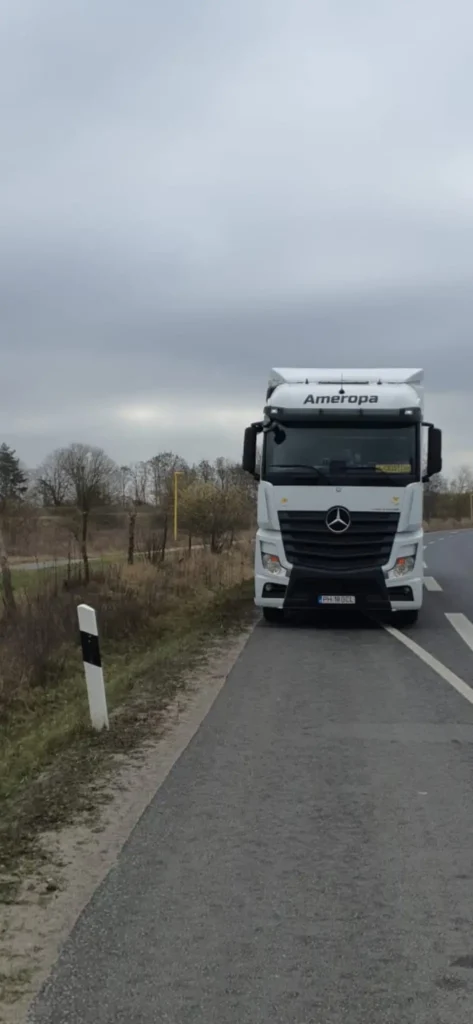
A dead starter on a B-road outside Erfurt is one of those breakdowns that sounds minor until you are the driver sitting in the cab, watching the ignition do nothing while the clock ticks and your delivery window shrinks. Electrical faults on heavy trucks rarely announce themselves in advance. One turn of the key works fine; the next produces a click, a flicker of dashboard lights, or nothing at all. For a haulier running international routes, that silence is expensive.
This is the story of a Mercedes-Benz Actros tractor unit, operating for the Romanian haulage firm Ameropa, that lost all power to start on a country road (B7) near Erfurt, Thuringia. Within an hour and forty-five minutes of the first phone call, the truck was diagnosed, repaired, and cleared to continue its journey. No towing, no overnight recovery, no cargo transferred to a second vehicle. Just a mobile technician, the right diagnostic approach, and a driver who knew who to call.
We are publishing the full breakdown here — the timeline, the diagnostic steps, the exact costs — because international drivers and fleet managers searching for truck roadside assistance near me or a reliable abschleppdienst in der nähe deserve to see what a properly organised breakdown response actually looks like, rather than guessing at what they might be charged or how long they might be stuck.
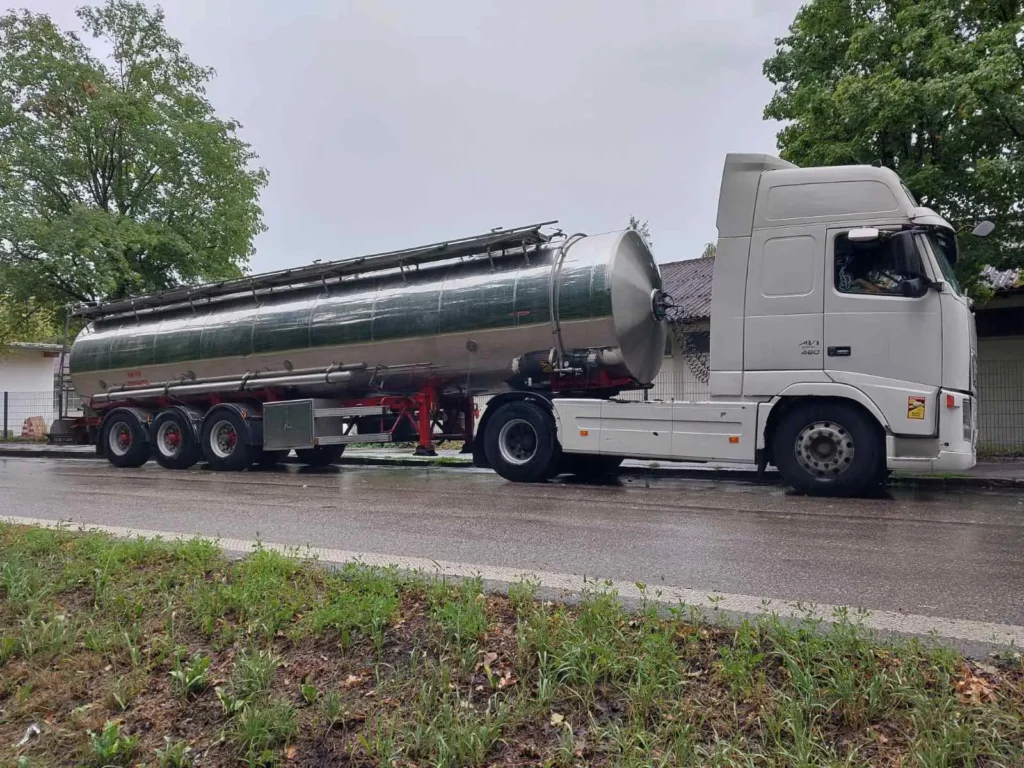
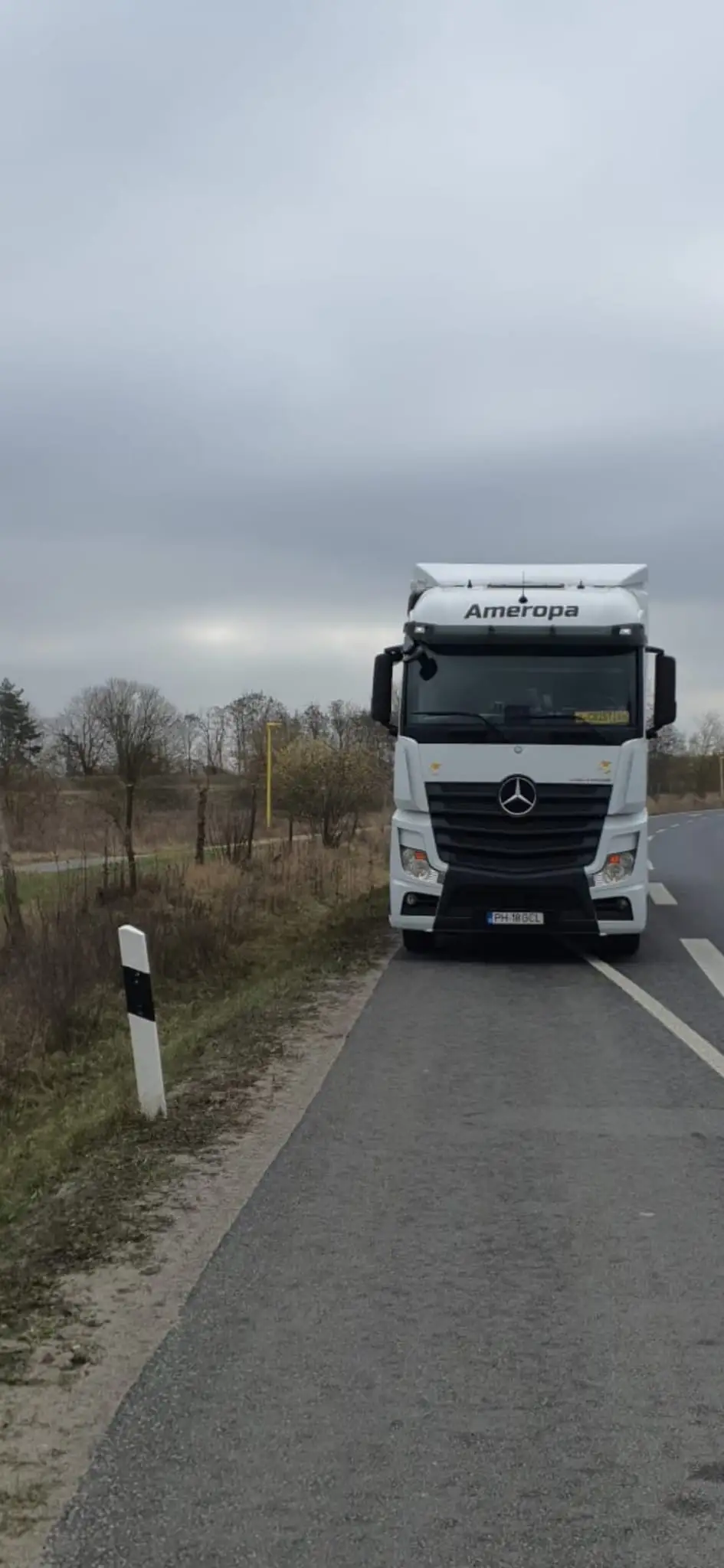
Mercedes-Benz Actros with a starting problem near Erfurt – mobile truck breakdown assistance by LKWHelp24.
The Emergency: A Truck That Would Not Start
The driver had pulled the Actros onto the shoulder of the B7 near Erfurt after noticing the engine sounded rough on the previous start. When he tried to restart the unit after a short stop, nothing happened. No crank, no turnover — just an unresponsive ignition system and a truck that, for all practical purposes, had become a very large paperweight on a public road.
For a Mercedes-Benz Actros hauling freight across borders, this is a genuinely stressful situation. The driver was on an unfamiliar route, in a country where he did not speak the language fluently, with a Romanian-plated vehicle that local garages might be reluctant to prioritise on short notice. He had no idea whether the fault was the battery, the starter motor itself, a corroded connection, or something deeper in the vehicle’s electrical architecture. What he did know was that every minute spent stationary was a minute closer to missing his delivery slot — and potentially triggering lkw fahrverbot restrictions later in the week if the delay pushed his route into a weekend driving ban window.
This is precisely the scenario where calling a generalist towing number, rather than a specialist truck breakdown network, costs drivers hours rather than minutes. A standard abschleppdienst built around passenger cars may not have the diagnostic equipment or spare parts stocked for heavy commercial vehicles, and may need to subcontract the job anyway — adding another layer of delay before anyone even reaches the truck.
How Help Was Organised
The driver reached LKWHelp24’s 24/7 emergency line at 09:40. From there, the dispatch process moved quickly because it is built specifically around commercial vehicle breakdowns, not adapted from a passenger-car towing service:
● Call received at 09:40 — dispatcher gathered the vehicle type (Mercedes-Benz Actros tractor unit), the symptoms (no start, no crank, dashboard behaviour), and the exact location on the B7 near Erfurt.
● Nearest available mobile pannendienst partner in the Erfurt area was identified and briefed on the likely fault categories (starter relay, battery, wiring fault) so the technician could bring the correct diagnostic equipment and likely spare parts.
● Partner confirmed and dispatched at 09:52, with an estimated time of arrival communicated back to the driver so he could plan around it rather than sit in uncertainty.
● Technician arrived on-site at 10:35 — under an hour after the initial call, despite the location being a rural B-road rather than a motorway service area.
● Real-time updates passed between the technician, LKWHelp24 dispatch, and the driver throughout, so nobody was left waiting without information.
This is the value of a partner network built specifically for truck emergency assistance: technicians who specialise in heavy vehicle electrical systems, carry the relevant relays and connectors, and understand that a stranded truck on a B-road is a safety hazard as well as a commercial one.
The Situation On-Site
When the technician reached the Actros at 10:35, the first priority — before touching a single wire — was securing the scene. A large commercial vehicle stopped on a B-road, even on the shoulder, creates a genuine hazard for passing traffic, particularly around bends or in low light. Warning triangles were placed at the appropriate distance behind the vehicle, hazard lights confirmed active, and the driver moved to a safe position away from the carriageway.
Only then did the diagnostic work begin. Electrical faults on heavy trucks are deceptively tricky: the symptom (no start) can point to several unrelated root causes, and guessing wrong wastes time and, in the worst case, damages other components. The technician worked through the standard diagnostic sequence for a no-start electrical fault on a Mercedes-Benz Actros:
- Battery voltage and terminal condition checked first, since a weak or poorly connected battery is the single most common cause of no-start faults on parked commercial vehicles.
- Starter motor circuit tested for continuity and resistance, isolating whether the fault sat in the starter itself or upstream in the relay and wiring.
- Starter relay and associated contacts inspected closely — corrosion, a failed relay, or a loose contact at this point in the circuit is a frequent culprit on vehicles that see heavy vibration and varying climates across long international routes.
- Wiring harness around the starter circuit checked for chafing, moisture ingress, or a loose ground connection, all common on trucks that spend long hours parked at rest stops and border crossings in variable weather.
The fault was traced to the starter relay and its contact point — a fault that, left undiagnosed, could easily have led a less experienced technician to condemn and replace an expensive starter motor unnecessarily, or worse, to attempt a jump-start that masks the underlying issue without fixing it.
Step-by-Step: How the Repair Was Carried Out
Step 1 — Scene Safety and Initial Assessment. Warning triangles positioned, hazard lights confirmed, driver relocated to safety. The technician conducted a visual inspection of the engine bay and battery compartment before connecting any diagnostic equipment.
Step 2 — Electrical Diagnosis. Using a multimeter and diagnostic scanner appropriate for heavy commercial vehicles, the technician measured battery voltage under load, tested the starter circuit, and isolated the fault to the starter relay and its contact.
Step 3 — Fault Isolation and Component Assessment. The relay and surrounding contact points were cleaned and tested; where contact degradation was confirmed, the relay and associated connector were replaced rather than temporarily bridged, to avoid a repeat failure further down the route.
Step 4 — Repair and Reconnection. The replacement relay and contact were fitted, wiring re-secured, and connections checked for a firm, corrosion-free fit — critical on a vehicle that will spend the following days on motorways and at border crossings in changeable weather.
Step 5 — Start Test and Functional Check. The engine was started, the technician confirmed a clean, immediate crank rather than a hesitant one, and checked the dashboard for any residual electrical warnings. Battery charging voltage was verified with the engine running to confirm the alternator and charging circuit were also functioning correctly, ruling out a secondary fault developing later on the road.
By 11:15, the Actros started cleanly. A further ten minutes of functional checks followed before the technician gave the all-clear.
Full Timeline
| Time | Phase | Action |
|---|---|---|
| 09:40 | Call received | Driver contacts LKWHelp24 24/7 line, reports no-start fault on B7 near Erfurt |
| 09:52 | Partner dispatched | Nearest mobile pannendienst technician briefed and en route, ETA given |
| 10:35 | Arrival on-site | Technician reaches the Actros, secures the scene |
| 10:45 | Diagnosis | Battery, starter circuit, relay and wiring tested; fault isolated to starter relay/contact |
| 11:15 | Repair and restart | Relay and contact replaced, engine started successfully |
| 11:25 | Functional check, cleared | Charging system verified, dashboard checked, driver cleared to continue |
Total elapsed time: approximately 1 hour 45 minutes from first call to the truck being back on the road. Time on-site: roughly 50 minutes.
Cost Breakdown
| Item | Price (EUR) |
|---|---|
| Call-out / 24/7 breakdown response | 170 |
| Diagnosis & on-site labour | 150 |
| Materials (relay/contact/jump-start equipment) | 60 |
| TOTAL | 380 EUR |
There was no secondary damage — no burnt-out starter motor, no damaged alternator, no towed vehicle. The final invoice reflects exactly what was needed: a call-out, diagnostic labour, and the parts consumed. Several factors kept the cost proportionate. First, the fault was diagnosed correctly on the first attempt rather than through trial-and-error part-swapping. Second, no towing was required, which on a rural B-road location can easily add several hundred euros and several extra hours to a breakdown bill. Third, because LKWHelp24 dispatches the nearest qualified partner rather than the nearest available generalist, the technician arrived with the right equipment already on the van, avoiding a second call-out for missing parts.
For comparison, a breakdown that required towing to a workshop, an overnight stay for the vehicle, and a next-day diagnostic slot at a fixed garage would typically run into four figures once towing, workshop labour, and the driver’s lost time are added up — before the actual repair cost is even factored in.
Why a Professional Service Is Essential for Electrical Faults
It is tempting, especially for an experienced driver, to think a no-start fault can be worked around with a set of jump leads and a bit of patience. In practice, that approach carries real risk on a heavy commercial vehicle:
- Jump-starting a truck with a genuinely faulty relay or wiring fault can mask the problem temporarily while allowing it to recur — often on a motorway, at a far less convenient and far more dangerous location.
- Incorrect diagnosis can lead to unnecessary part replacement, particularly starter motors, which are expensive and rarely the actual cause of a relay-level fault.
- Working on a truck’s electrical system at the roadside without proper scene safety — warning triangles, hazard positioning, visibility — puts the driver and technician at serious risk from passing traffic, especially on rural roads without a hard shoulder.
- Heavy vehicle electrical systems, particularly on modern Mercedes-Benz Actros models, are more complex than passenger car equivalents and often require diagnostic tools that go beyond a basic multimeter to interpret correctly.
- A vehicle left stranded without professional intervention risks secondary damage, missed delivery windows, and in some cases conflicts with driving time regulations if the delay pushes a driver’s schedule into restricted hours.
Typical Breakdown Situations We Handle Across Germany
LKWHelp24’s partner network responds to the full range of heavy vehicle breakdowns across German roads and motorways, not just electrical faults. Situations our partners handle regularly include:
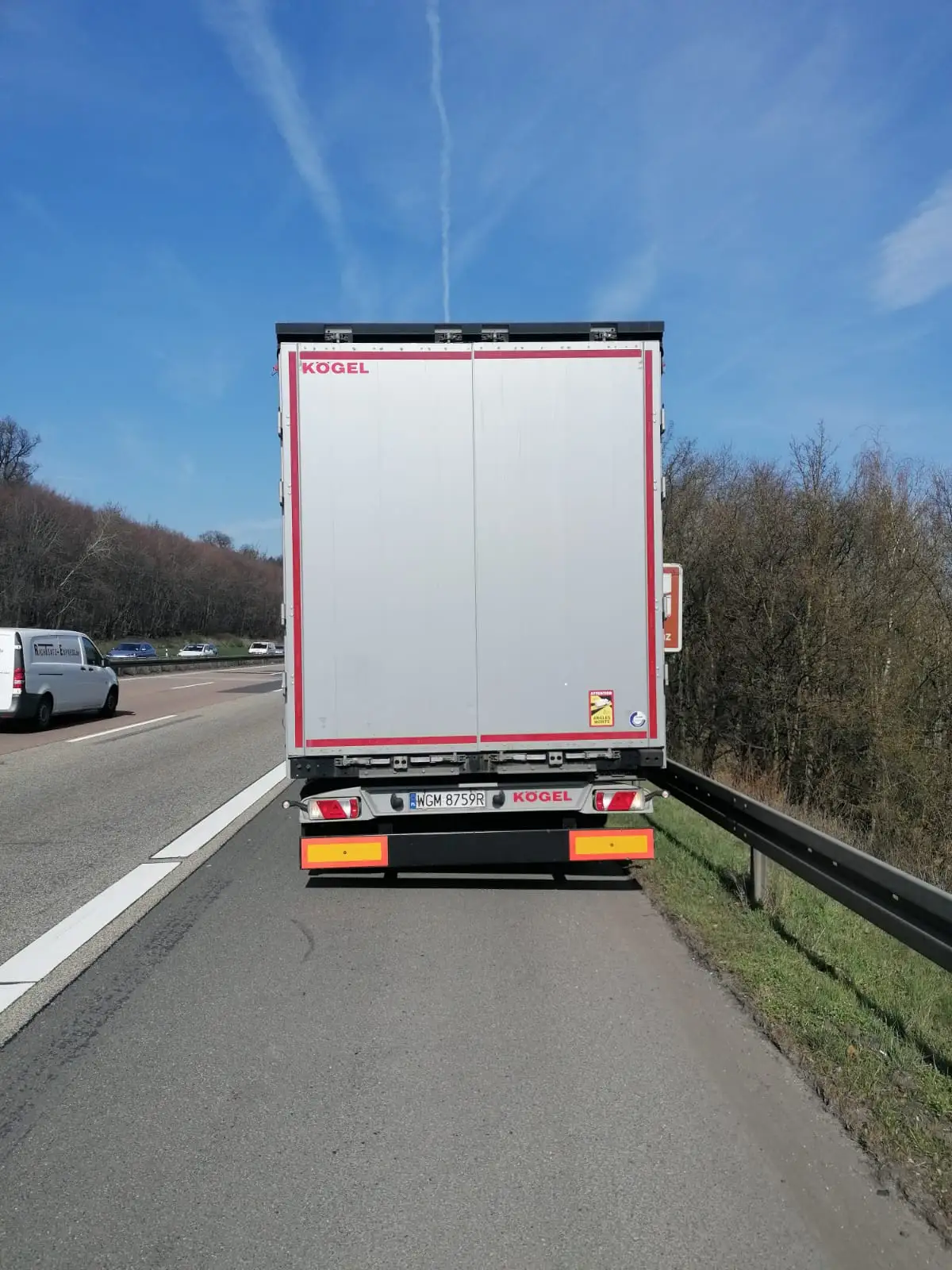
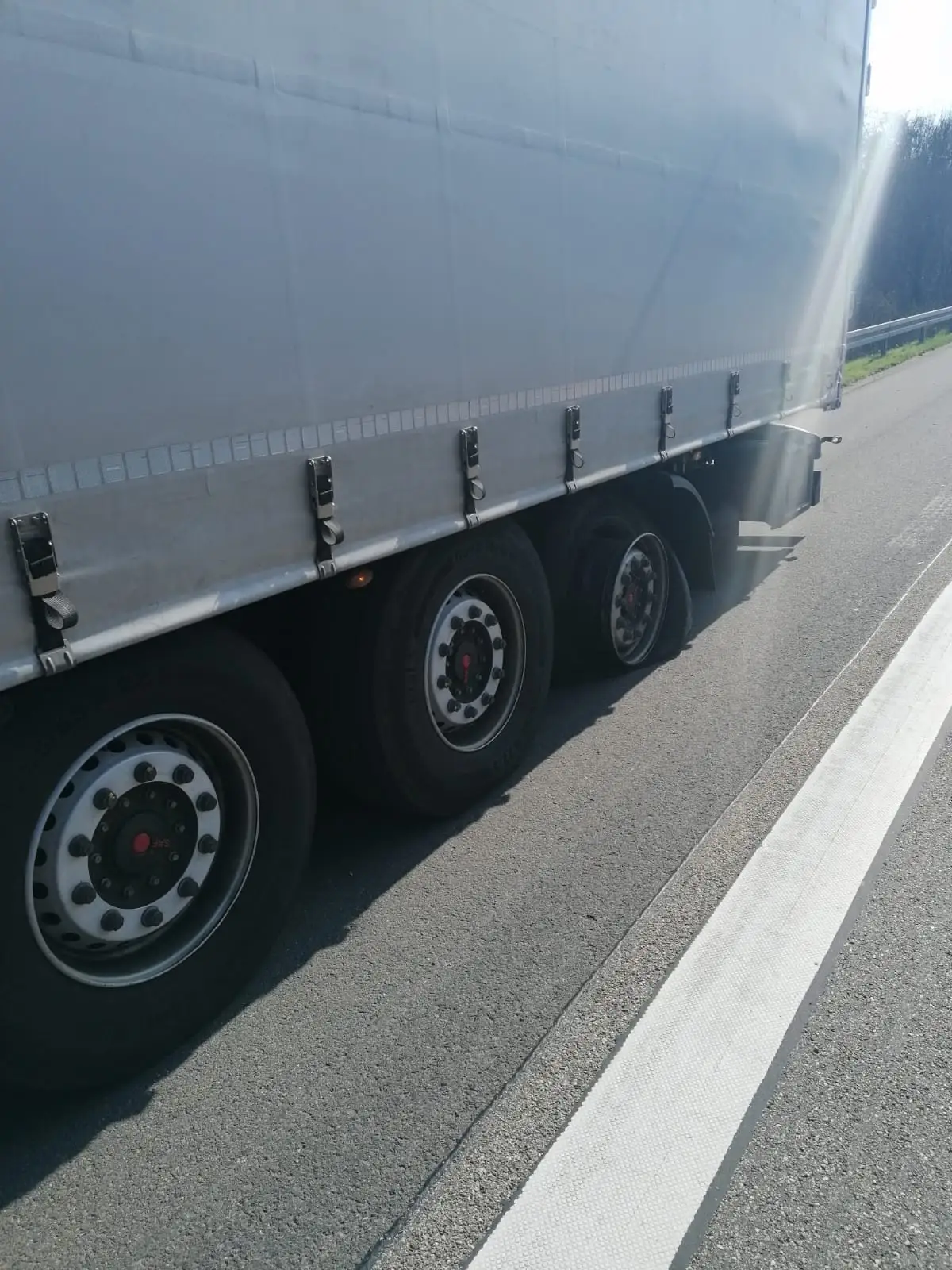
- Tyre blowouts and punctures on motorways and rural roads, including dual-wheel replacement for tractor units and trailers
- Starter, battery, and wider electrical faults like the one described above
- Diesel-related breakdowns, including fuel system bleeding after running low or refuelling with contaminated fuel — see our related case on MAN diesel fuel system bleeding on the motorway
- Cooling system failures, including burst or leaking coolant hoses, which are a common cause of overheating breakdowns on long summer routes
- Charge air (turbo intercooler) hose failures, which cause power loss and can trigger fault codes that stop a vehicle from being driven further
- Full recovery and towing when on-site repair is not possible
- Trailer and semi-trailer specific faults, including brake and lighting circuit issues that require roadworthiness assessment before continuing
If your fault sits somewhere else on this list, our related cases go into more depth: our coolant hose breakdown case near Frankfurt on the A5 and our charge air hose recovery case near Kassel on the A7 both walk through similar rural and motorway breakdown scenarios with full timelines and pricing.
Prevention Tips for Drivers and Fleet Managers
Electrical faults, more than most breakdown categories, give early warning signs that are easy to miss under time pressure. A few habits reduce the odds of a repeat of this scenario:
- Pay attention to slow or hesitant starts over several days — a starter motor or relay beginning to fail rarely goes from perfect to dead overnight. A rough or delayed start is worth having checked before it becomes a roadside breakdown.
- Have battery terminals and connections inspected as part of routine servicing, particularly on vehicles that cross borders frequently and experience varied climates and vibration on different road surfaces.
- Keep a record of any dashboard warning lights, even ones that clear themselves. Intermittent electrical faults often show a pattern before they become a full failure.
- Fleet managers should ensure drivers know the correct emergency contact number before departure, not after a breakdown occurs. A driver stuck on an unfamiliar road, searching online for road service assistance at short notice, loses time that a saved contact avoids entirely.
- Where possible, schedule electrical system checks alongside routine brake and tyre inspections rather than treating them as a separate, lower-priority item — modern trucks depend on their electrical systems for far more than starting the engine.
Fleet Maintenance and Choosing the Right Replacement Parts
When a starter relay, contact, or related electrical component needs replacing, the quality of the replacement part matters more on a heavy commercial vehicle than it might on a passenger car, simply because of the duty cycle involved. A truck’s electrical system starts and runs a much larger engine, often multiple times a day, in a far wider range of temperatures and vibration conditions than a typical car ever experiences.
For fleets running Mercedes-Benz Actros units specifically, OEM-spec electrical components or parts from established commercial vehicle suppliers are worth the modest price difference over generic alternatives, particularly for relays and connectors that sit in high-vibration areas of the engine bay. The same logic applies to tyres and other consumables across a fleet: brands like Michelin, Continental, and Goodyear consistently perform better across the mixed motorway and rural road conditions typical of long-haul European routes, and the total cost of ownership tends to favour quality components once you factor in reduced breakdown frequency and downtime.
Fleet managers running multiple Actros units, or mixed fleets including MAN, Scania, or Volvo tractors, benefit from a standing relationship with a breakdown partner who already knows their fleet’s typical fault patterns. A single call-out history across a fleet builds a picture over time — which vehicles are approaching the end of a component’s service life, which routes see the most breakdowns, and where preventive maintenance would pay for itself fastest.
LKWHelp24: Your Truck Emergency Partner Across Germany
LKWHelp24 exists because breakdowns do not happen on a schedule, and international drivers should not have to navigate a foreign country’s roadside assistance market alone, in a language they may not speak, at the exact moment they are most stressed. What sets the service apart:
- 24/7 availability across all of Germany — motorways, rural roads, and everything in between, with no region treated as too remote to reach promptly.
- A vetted partner network of specialist heavy vehicle technicians, not a generalist towing directory, meaning the person who arrives actually carries the diagnostic tools and parts a commercial vehicle breakdown requires.
- Multilingual dispatch and support, so international drivers like the one in this case are never stuck trying to explain a mechanical fault in a language they do not speak.
- Transparent, itemised pricing communicated before work begins wherever possible, so drivers and fleet managers are never surprised by the final invoice.
- A single point of contact for the whole incident — from the first phone call through diagnosis, repair, and functional sign-off — rather than being passed between a dispatcher, a garage, and a parts supplier separately.
- Direct experience with a wide range of makes, including Mercedes-Benz Actros, MAN, Scania, DAF, and Volvo, meaning technicians are not learning a vehicle’s systems for the first time on the roadside.
Summary
- Vehicle: Mercedes-Benz Actros tractor unit, Ameropa haulage
- Fault: Electrical/no-start fault (starter relay and contact)
- Location: B7 near Erfurt, Thuringia
- Response time: 12 minutes from call to dispatch, on-site within 55 minutes of the initial call
- Total time, call to cleared: 1 hour 45 minutes
- Time on-site: approximately 50 minutes
- Total cost: 380 EUR
- Secondary damage: None
- Outcome: Full repair on-site, no towing required, driver cleared to continue immediately
Request Emergency Assistance Now
If you are stranded with a truck, trailer, or bus anywhere in Germany, do not waste time searching and hoping. Call LKWHelp24 directly.
Phone: +49 160 5753826
Website: www.lkwhelp24.com
Available 24/7 across all of Germany
You might also be interested in
- MAN Diesel Emergency Service: Fuel System Bleeding on the Motorway
- Engine Breakdown on the A5 Near Frankfurt: Coolant Hose Failure, 2026
- Truck Recovery on the A7 Near Kassel: Charge Air Hose Failure, 2026
- Truck Tyre Service Near Me: Emergency Tyre Replacement on the A43
- How LKWHelp24’s Partner Network Handles Nationwide Truck Breakdowns